

Before we dive in, it's worth acknowledging that many of the symptoms we're about to discuss aren't unique to men.
Women experience fatigue, weight gain, irritability, poor sleep, and hormonal changes too. The difference is that women are often more likely to talk about these symptoms, compare notes with friends, or seek medical care when something feels off. Men, on the other hand, are more likely to normalize symptoms, push through them, or assume they're simply part of getting older.
While men's and women's bodies are different in important ways, many of the same biological systems are at work underneath the surface—sleep, hormones, metabolism, stress, inflammation, muscle mass, and cardiovascular health. They simply tend to present differently and at different stages of life.
One thing I've noticed in practice is that men rarely come in saying, "I think I have insulin resistance," or "I wonder if I have sleep apnea."
Instead, they come in saying things like:
"I'm just tired."
"I can't lose this belly weight."
"I don't recover like I used to."
"My partner says I snore."
"I just don't feel like myself."
The symptom is what gets their attention. The real question is what might be causing it.
"I'm Just Tired"
If a man comes into the office and mentions fatigue, he's usually already past the point of explaining it away. He's testing the waters. He's wondering if what he's experiencing is something more than getting older, being busy, or not getting enough sleep.
Maybe he's already tried going to bed earlier. Maybe he took a vacation and still didn't feel refreshed.
What many people don't realize is that fatigue is one of the least specific—and most important—symptoms in medicine. Poor sleep quality, sleep apnea, insulin resistance, chronic stress, burnout, low testosterone, depression, medication side effects, and a host of medical conditions can all show up as fatigue.
The challenge is that tiredness becomes normal. You can't remember what it feels like to wake up rested anymore. You've adapted to surviving on caffeine, pushing through the afternoon slump, and assuming everyone feels the same way.
"I Can't Lose the Belly Weight Anymore"
This is one of the most common complaints I hear from men.
The conversation usually starts with frustration.
"I haven't changed anything."
"I'm eating the same way I always have."
"It wasn't this hard ten years ago."
And honestly, they're often right.
As we age, metabolism changes. Muscle mass naturally declines if we don't actively work to maintain it. Sleep quality worsens. Stress accumulates. Activity levels often decrease as jobs become more sedentary and life gets busier.
What concerns me isn't usually the number on the scale. It's where the weight is accumulating.
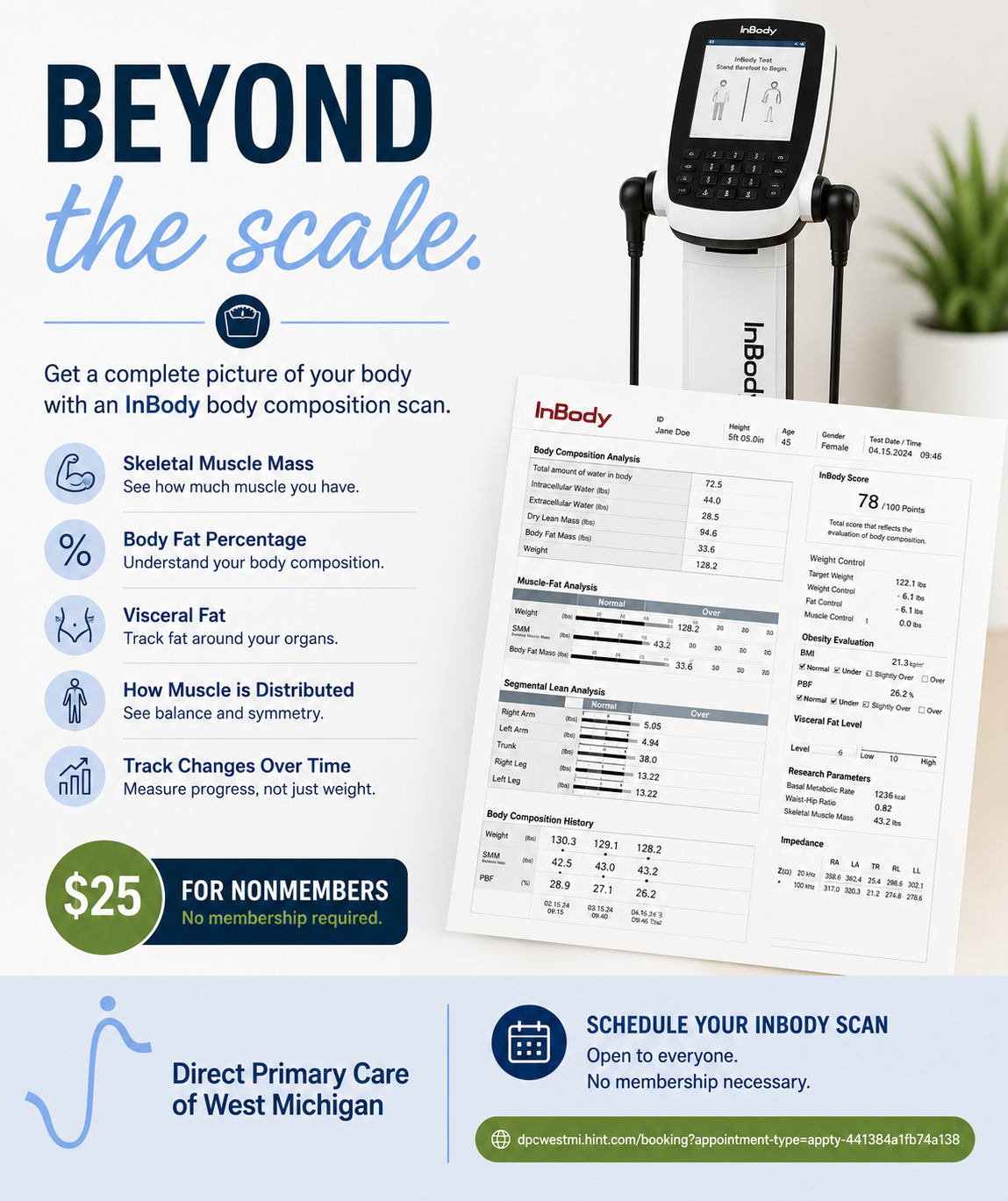
Belly fat is more than a cosmetic issue. The fat surrounding our abdominal organs—called visceral fat—is metabolically active. It contributes to inflammation, insulin resistance, elevated blood sugar, high blood pressure, fatty liver disease, and increased cardiovascular risk.
That's one reason I measure visceral fat on every patient in our practice. It often tells us more about someone's health than their weight alone.
"I'm More Irritable Than I Used To Be"
Men don't always describe stress, anxiety, or depression the way women do. Rarely does someone sit down and tell me, "I think I'm depressed."
More often I hear:
"I'm more short-tempered than I used to be."
"I have less patience."
"Everything gets on my nerves."
"I'm frustrated all the time."
Sometimes I hear it from a spouse or partner before I hear it from the patient.
Poor sleep, chronic stress, hormonal changes, burnout, financial pressures, strained relationships, and depression can all contribute.
What's interesting is that these factors don't just affect emotional health—they effect our relationships and then they physical health too. Research consistently shows that people with strong social connections and healthy relationships tend to have better health outcomes and live longer than those who are socially isolated.
Our emotional health and physical health are far more connected than we often realize.
"I Don't Recover Like I Used To"
This is another favorite of my patients.
And yes, aging absolutely affects recovery. But that doesn't mean we should ignore it.
When someone tells me they used to bounce back after a workout, a weekend project, or a long day of physical activity but now feel sore and exhausted for days, I start thinking beyond age alone. Recovery is influenced by so many factors—sleep quality, nutrition, muscle mass, stress levels, inflammation, and overall metabolic health. In many cases, the body simply isn't getting what it needs to repair and rebuild as efficiently as it once did.
The body does most of its healing during periods of recovery. When recovery starts to suffer, it's often worth taking a closer look at whether the body has the resources it needs to do that job effectively.
"My Partner Says I Snore"
Translation: "My partner sent me here and wants me checked for sleep apnea.” Honestly, sleep partners have probably saved countless lives by bringing this issue to attention. Many people assume snoring is annoying but harmless.
Sometimes it is.
Sometimes it's not.
Sleep apnea is incredibly common and frequently underdiagnosed, especially in men. Left untreated, it contributes to fatigue, high blood pressure, insulin resistance, heart disease, brain fog, weight gain, low testosterone, and mood changes.
If your partner notices pauses in your breathing while sleeping, if you wake up exhausted despite spending enough time in bed, or if you find yourself dozing off during the day, it's worth paying attention.
This is one of those situations where your partner may have recognized a health problem before you did.
"I Just Don't Feel Like Myself"
This may be the most important symptom of all.
Sometimes people can't point to one specific problem.
They simply know something feels different.
They're functioning, but not thriving.
And that's often where the real conversation begins.
You may be noticing a pattern by now. Most of these symptoms have overlapping root causes. Poor sleep affects hormones. Hormones affect metabolism. Metabolism affects energy. Stress affects sleep. Sleep affects recovery.
Nothing in the body happens in isolation.
That's why there usually isn't a single magic test or a single magic treatment. The goal is to identify the biggest contributors and start addressing them one at a time. Sometimes that starts with diagnostics. Sometimes it starts with lifestyle changes. Sometimes medications or treatments are appropriate. Most often, it's a combination of several small improvements that begin moving things in the right direction.
When someone comes to me with concerns like these, I'm usually less interested in the symptom itself and more interested in the story behind it. I want to know when they last felt like themselves. I want to know how they're sleeping, what their stress levels look like, whether anything significant changed around the time the symptoms started, how they're eating, moving, drinking, working, and connecting with the people around them.
Those details often reveal far more than a lab value ever could.
Deep down, most men know when something has changed.
The hard part isn't recognizing it.
The hard part is talking to someone about it.
Some of the most important conversations I have with patients start with a simple observation:
"I just don't feel like myself."
That's usually where we begin—not with a diagnosis, but with a conversation.
If that's where you are, don't ignore it.
Start the conversation.
You might be surprised what you learn.
-----
The information shared by Direct Primary Care of West Michigan is for educational and informational purposes only and should not be considered medical advice. Reading this content does not establish a physician-patient relationship and should not replace consultation with your healthcare provider regarding your specific medical concerns.