
What these updates mean for your heart health
If you're like most people, the phrase “cholesterol guidelines” probably doesn’t get you excited. But as a primary care physician, I’m genuinely excited about these updates—and here’s why you should be too.
These guidelines, released in March 2026 by the American College of Cardiology and American Heart Association, reflect one of the most significant updates in cholesterol management in years.
These new guidelines represent a meaningful shift from the traditional way of thinking about cholesterol management. They move us toward a more precise, personalized approach—one that aligns closely with how I already practice medicine.
Instead of applying a one-size-fits-all model, we now have tools that allow us to better understand your individual risk and tailor recommendations accordingly. The result is more thoughtful, targeted care—and ultimately, better outcomes for more people.
While I don’t go into detail on it below, it’s worth emphasizing that lifestyle modification remains foundational. In fact, the American Heart Association has introduced what it calls the “Essential 8,” which strongly echoes the core pillars of Lifestyle Medicine—particularly in areas such as nutrition, physical activity, sleep, and metabolic health.
What’s Changed? The Big Picture
Instead of focusing primarily on LDL (“bad cholesterol”), we now look at a broader, more meaningful set of factors when assessing risk:
- Genetic predisposition
- Cholesterol particle number
- Existing plaque burden
- Metabolic health
- Social determinants of health
This allows doctors to give patients a much more personalized—and more accurate—plan for preventing heart disease.
Here are the four key updates I want you to understand:
1. Lipoprotein(a): Your Genetic Risk Marker
What the guideline says:
Everyone should have Lipoprotein(a), or LP(a), checked at least once in their lifetime.
Why I care about it:
LP(a) gives me insight into your genetic cardiovascular risk—and importantly, it’s independent of your lifestyle.
That means you can be doing everything right—eating well, exercising, avoiding smoking—and still have elevated risk based on genetics alone. I’d pay especially close attention to this if there’s a family history of early heart attack or stroke.
2. Apolipoprotein B (ApoB): A More Precise Risk Measure
Who gets checked for this:
The guidelines recommend ApoB testing in patients with:
- Elevated triglycerides
- Insulin resistance
- Type 2 diabetes
- Metabolic syndrome
- Strong family history of heart disease
Why it matters:
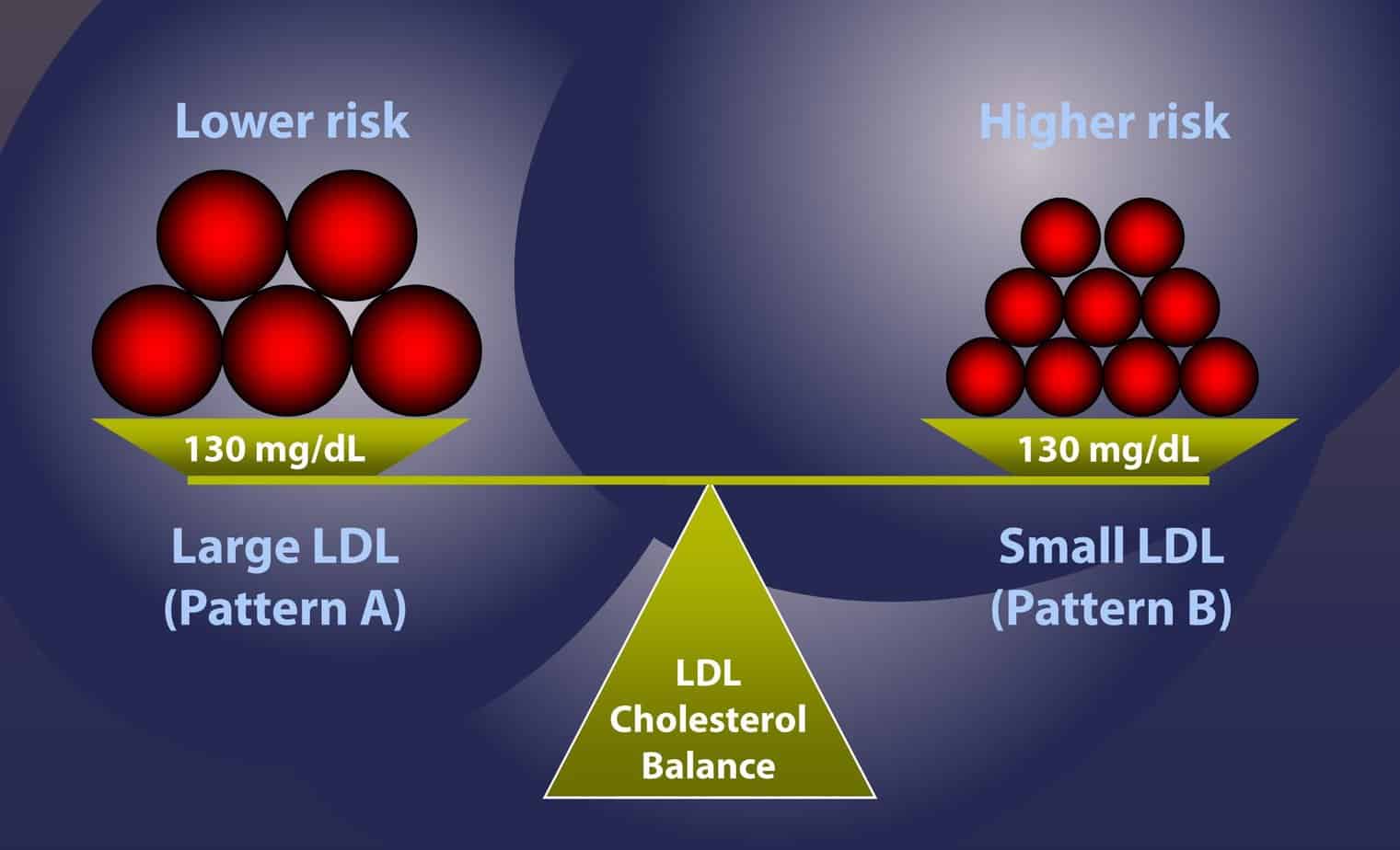
ApoB tells me how many atherogenic particles are circulating in your bloodstream—not just how much cholesterol they carry.
I often explain it like this:
LDL tells me how much cholesterol mass there is.
ApoB tells me how many particles are actually capable of causing damage.
More ApoB particles = more opportunities for plaque to form.
What this means clinically:
If your ApoB is high—even if your LDL looks okay—your risk just went up (take it seriously). It changes how aggressively you should approach prevention and/or treatment.
3. Coronary Artery Calcium (CAC): The Tiebreaker
What’s new:
Coronary calcium scoring is now a Class 1 recommendation, meaning the evidence strongly supports its use.
When to use it:
This test is best used when we’re in a gray area—when it’s not clear whether starting medication (like a statin) is the right move.
What it tells me:
It shows how much calcified plaque is already present in your arteries.
Who I consider it for:
- Men over 40
- Women over 45
- Intermediate or higher risk patients who are hesitant about medication
- Situations where we need more clarity
This test is incredibly helpful because it moves us from estimating risk to actually seeing evidence of disease.
4. The PREVENT Risk Calculator: Prediction just got better
What’s changed:
The PREVENT risk calculator replaced the older ASCVD tool.
Why this is significant:
The older calculator often overestimated risk—sometimes by as much as 40–50%.
What I like about PREVENT:
- It includes patients as young as 30
- It looks at both 10-year and 30-year risk
- It incorporates more meaningful data:
- BMI
- A1C
- Kidney function
- Social determinants of health
One of the most novel updates is that it uses zip code instead of race, which theoretically gives me a more accurate picture of environmental and socioeconomic influences on health.
Updated LDL Targets
The guidelines also make LDL goals more straightforward:
- General prevention: <100 mg/dL
- Higher risk: <70 mg/dL
- Very high risk: <55 mg/dL
But importantly, one should not make therapeutic decisions based on LDL alone —it’s just one piece of the puzzle.
A Real-World Example: My Own Numbers
To show you how this plays out, I’ll share my inputs for the PREVENT Risk Calculator:
- Age 45
- Sex: Female
- Total Cholesterol: 244
- HDL: 73
- Systolic Blood Pressure: 118
- Diabetes: No
- Current Smoker: No
- Taking Statin: No
- Taking Blood Pressure Med: No
- eGFR: >90
- BMI: 21
- Zip Code: 49315
Final Score:
- 10-year risk: 0.82%
- 30-year risk: 6.55%
At first glance, my Total Cholesterol might raise concern, but note the normal blood pressure, healthy BMI, and HDL total. According to the PREVENT risk calculator, I fall into the low risk category (<3% risk), and the recommendations are as follows:
- Health behavior counseling.
- If LDL-C 160–189 mg/dL or 30-year ASCVD risk is ≥10%, consider moderate-intensity statin therapy.
The following groups should receive lipid-lowering therapy regardless of calculated risk:
- Established clinical ASCVD.
- LDL-C ≥190 mg/dL.
- Aged 40–75 with diabetes, chronic kidney disease stage 3 or higher, or HIV on stable combination antiretroviral therapy.
So what did I do with that information?
I didn’t ignore it— I continue to focus on lifestyle optimization and long-term monitoring. I have a very strong history of early cardiovascular disease, so I have also had my LP(a), ApoB and Coronary Calcium Score done, which were great (except the Apo B - that correlated with the LDL of 163).
This is what precision prevention looks like: making decisions based on the full picture, not a single number.
What to Ask Your Doctor About Your Cholesterol
If you’ve read this far, you’re already ahead of the curve. Here are a few simple, high-impact questions you can bring to your next visit:
- Have I ever had my Lipoprotein(a) checked?
- Would ApoB testing give us a better picture of my risk?
- Am I a candidate for a coronary calcium scan?
- Can we calculate my risk using the PREVENT calculator?
- What does my overall risk look like—not just my LDL?
If these conversations haven’t come up in your care, it’s reasonable to ask about them.
The Bottom Line
These updated guidelines represent a meaningful shift in the practice of medicine.
We’re moving away from one-size-fits-all thresholds and toward personalized, data-driven prevention—and I believe that’s a huge step forward for patient care.
If you haven’t had a recent conversation about your cardiovascular risk, this is a great time to start. These tools allow us to make smarter, more individualized decisions about your health.
And more importantly, they give us the opportunity to intervene earlier, more thoughtfully, and with greater precision than ever before.
About Me
I’m Dr. Angela Andrews, a primary care physician and founder of Direct Primary Care of West Michigan. I also host The Lifestyle MD podcast, where I break down complex medical topics into practical, actionable steps you can actually use in your daily life.
I also cover this topic in a brief podcast episode—listen here or whereever you get your podcasts.