
You’ve heard that you should lift weights.
Maybe your doctor has recommended it. Maybe you’ve read about the importance of maintaining muscle as you age. Or maybe you’ve walked past the weight section at the gym and thought, I should probably be doing some of that—but I have no idea where to start.
If that sounds familiar, this is for you.
In Soundbite Episode 08 of The Lifestyle MD, “Weightlifting 101,” I break down strength training for the true beginner—someone with little or no experience who wants to get started but needs to know what to actually do.
The episode was inspired by my colleague, Dr. Greg Colton, who suggested I create something specifically for people with little or no strength-training experience. Because while we spend a lot of time telling people that they should strength train, we don't always do a very good job explaining how to actually begin.
This guide gives you the basics from Soundbite Episode 08 in a format you can come back to when you're ready to put together your first workout.
Why Strength Training Matters
Current physical activity guidelines recommend that adults perform muscle-strengthening activities at least two days per week.
There are good reasons for that.
Resistance training can help you build and maintain muscle, increase strength, support bone health, improve metabolic health, maintain mobility and physical function, and preserve independence as you age.
And that last one matters more than we sometimes realize.
Think about what you want your life to look like at 65, 75, or 85.
Do you want to travel? Carry your own luggage? Get up from the floor? Work in the garden? Play with your grandchildren? Carry groceries into the house without thinking twice about it?
Those things require strength.
The goal isn't simply to lift heavier weights. We're training for the life we want to continue living.
First: You Don't Need to Become a "Weightlifter"
When people hear strength training, they sometimes picture barbells, squat racks, and very muscular people lifting enormous amounts of weight.
That is one version of strength training. It is certainly not the only one.
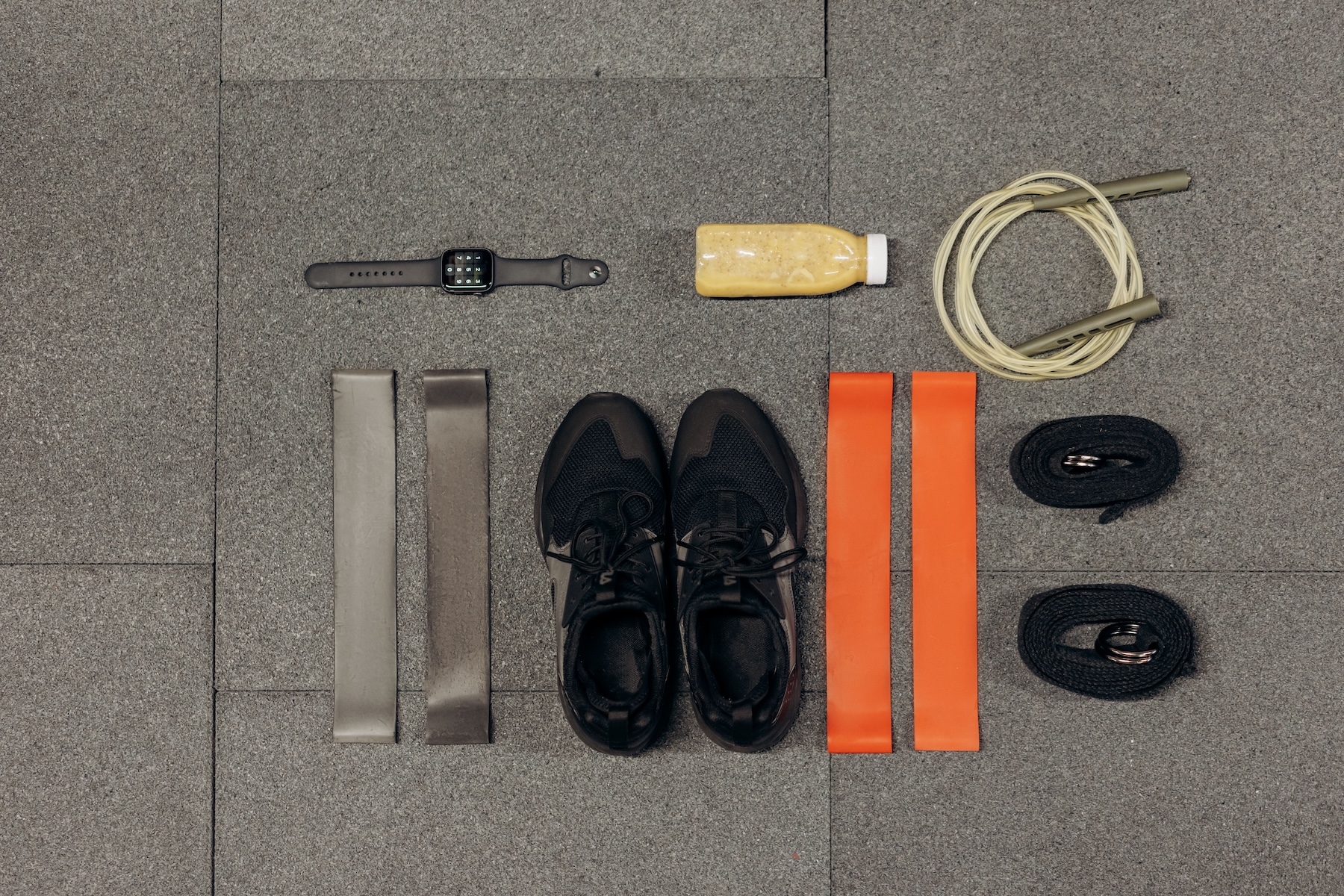
Resistance can come from your own body weight, resistance bands, dumbbells, kettlebells, weight machines, barbells, or even household objects.
A gallon jug, backpack, or heavy grocery bag can become resistance.
The important part isn't the equipment.
Your muscles need to encounter enough resistance that they have a reason to adapt.
Start With Five Basic Movement Patterns
You do not need dozens of exercises to get started.
Instead, build your workouts around a few basic movement patterns that translate well to everyday life.
1. Squat
Think: sitting down and standing back up.
If you're brand new, start with a chair. Sit down under control and stand back up.
As you get stronger, you can progress to a bodyweight squat, goblet squat with a dumbbell or kettlebell, or even hold something you already have at home—like a jug of water.
2. Hinge
A hinge means bending primarily at the hips while maintaining control through your trunk.
This is the movement you use when picking something up from the ground.
A simple hip hinge can eventually progress into exercises such as a Romanian deadlift using dumbbells, kettlebells, or a barbell.
3. Push
You can start with something as simple as a wall push-up.
As you get stronger, move your hands to a countertop or bench, then eventually progress toward a traditional floor push-up.
You can also use dumbbells or machines for pressing movements.
4. Pull
Pulling exercises strengthen the muscles of your back and arms.
A resistance-band row is an excellent beginner option. If you have access to weights or a gym, you could also perform a dumbbell row or use a seated-row machine.
5. Carry or Core
One of my favorite functional exercises is the farmer's carry: hold a weight in each hand and walk.
Simple? Yes.
Easy? Not necessarily.
Carries challenge your grip, trunk, shoulders, and overall stability. Other core exercises can be substituted depending on your ability and equipment.
How Heavy Should the Weight Be?
This is where beginners often get stuck.
You don't need to know your one-rep max. You don't need complicated percentages. And you don't need to lift until you physically cannot complete another repetition.
A practical starting point is to choose a resistance you can perform for roughly 8 to 12 controlled repetitions.
But here's the important part:
The last few repetitions should feel challenging.
If you finish 12 repetitions and feel like you could easily do another 10 or 15, the exercise probably isn't providing much of a strength stimulus.
Instead, aim to finish most sets feeling like you could have done another two or three good repetitions if you absolutely had to.
That gives your muscles a meaningful challenge without requiring you to train to complete failure.
For some exercises, making the movement harder doesn't even require adding weight. You can change your body position, increase the range of motion, slow the movement down, or progress to a more difficult variation.
Your First Strength-Training Program
You don't need a complicated five-day workout split.
Start with two full-body strength-training sessions each week, ideally with at least a day between them.
Choose four or five movements:
Squat: Chair sit-to-stand or goblet squat
Pull: Resistance-band row or dumbbell row
Push: Wall/counter push-up or dumbbell press
Hinge: Hip hinge or Romanian deadlift
Carry/Core: Farmer's carry or another core exercise
For most exercises, start with:
1–2 sets of 8–12 repetitions
For a carry, you can work by time or distance instead—for example, walking for 20–30 seconds.
That's it.
You don't need to destroy yourself during your first workout. You need to establish a starting point that you can repeat.
Then Comes Progressive Overload
Your body is very good at adapting.
That means the workout that feels challenging today eventually becomes easier. When that happens, you need to gradually increase the challenge.
This is called progressive overload.
You might add a little more weight, perform another repetition, add another set, increase your range of motion, or progress to a harder version of the exercise.
You don't need to change everything at once.
Small increases over time add up.
If you started doing wall push-ups and now they're easy, move to the kitchen counter. Eventually, you may move to a bench and then toward the floor.
That's progress.
Don't Wait Until You Feel "Ready"
One of the biggest mistakes beginners make is assuming they need to understand everything before they start.
You don't.
You need a few basic movements, an appropriate level of resistance, and consistency.
Your technique will improve. Your confidence will improve. Your program will evolve.
Whether you are 25 or 65, a former athlete or someone who has never picked up a dumbbell, you are allowed to be a beginner.
And remember what you're really training for.
Not just bigger muscles.
You're building the strength to carry your groceries, climb stairs, get yourself off the floor, travel, garden, play, work, and continue doing the things that make your life yours.
Start with two days a week. Keep it simple. Make it challenging enough to matter. Then keep showing up.
For more, listen to The Lifestyle MD Soundbite Episode 08: “Weightlifting 101,” where I walk through these basics and help you take the first steps toward building a sustainable strength-training routine.
If you have a medical condition, significant pain, balance concerns, or physical limitations that may affect your ability to exercise safely, talk with your physician or a qualified exercise professional about appropriate modifications.