
See Beyond the Scale
Most of us have been conditioned to focus on a single number: weight.
You step on the scale, see the number go up or down, and immediately decide whether we're making progress.
But your weight only tells you how heavy you are. It doesn't tell you what makes up that weight.
That's where body composition comes in.
What Is Body Composition?
Your body weight is made up of several components, including:
- Muscle
- Body fat
- Water
- Bone
- Organs and other tissues
Two people can weigh exactly the same amount and have dramatically different body compositions.
One person may have more muscle and less body fat. Another may have less muscle and more body fat. Although the scale shows the same number, their health risks, strength, metabolism, and physical function may be very different.
The "Big-Boned" Myth
One of the things I hear most often is:
"I've always been big-boned."
While people do naturally have different frame sizes, bone accounts for a relatively small percentage of body weight. Differences in bone size alone rarely explain large differences in weight.
What many people are really asking is:
"Am I carrying excess body fat, or is my weight coming from something else?"
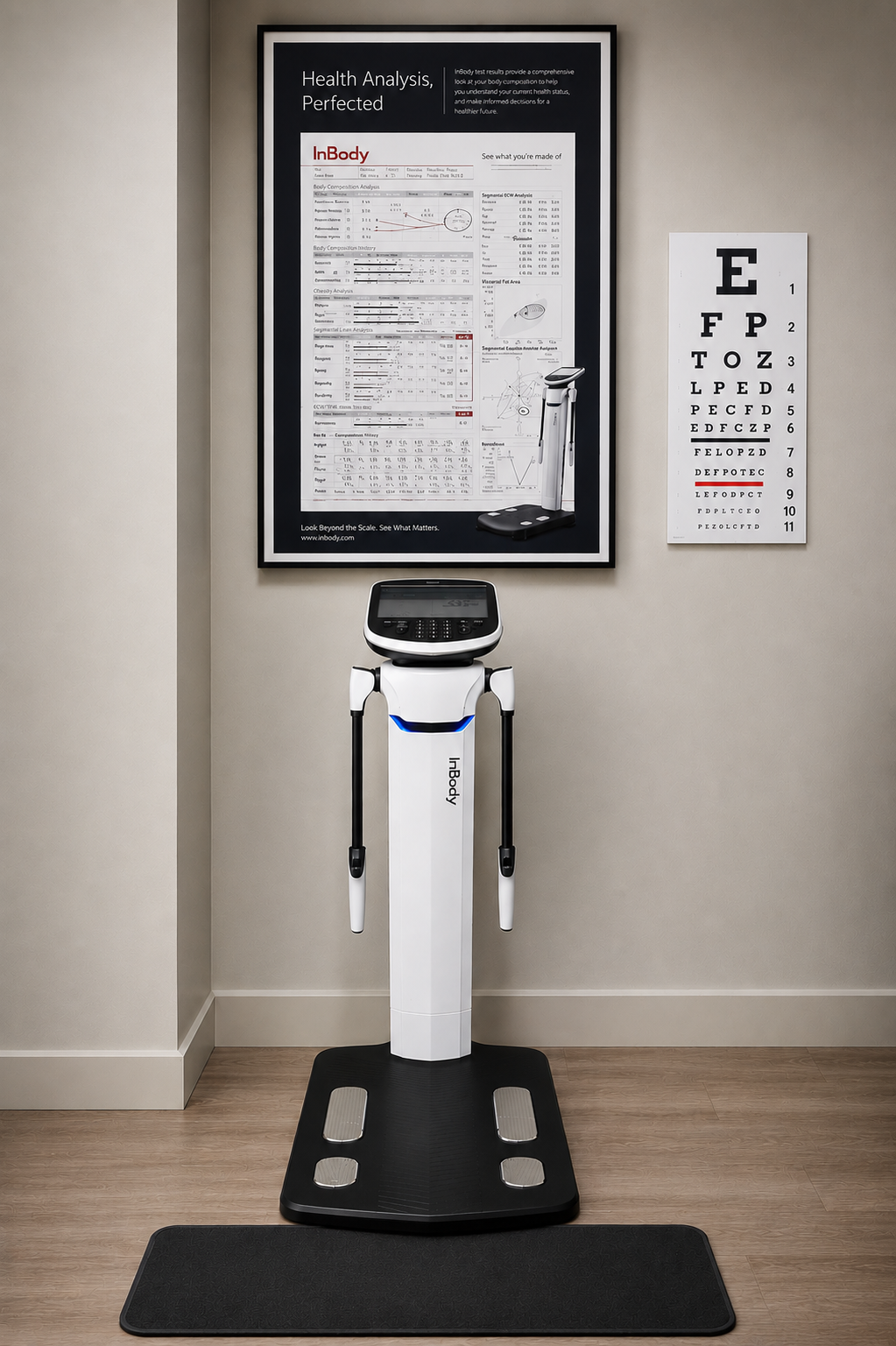
An InBody scan helps answer that question.
Instead of guessing, we can objectively measure muscle mass, body fat percentage, body water, and other components of body composition.
Not All Weight Is Created Equal
Two people can weigh exactly the same amount and have dramatically different body compositions.
One person may have a healthy amount of muscle and relatively low body fat.
Another may have less muscle and a higher percentage of body fat.
The scale sees them as identical.
Their metabolism does not.
This is one reason I dislike using weight alone as a marker of success. It simply doesn't tell the whole story.
Why Muscle Matters
Muscle is one of the most metabolically valuable tissues in the body.
It helps regulate blood sugar, supports physical function, improves strength and balance, and contributes to a healthy metabolism.
As we age, we naturally begin to lose muscle mass unless we actively work to maintain it.
That's why my goal for patients is rarely just weight loss.
I want patients to lose excess body fat while preserving—or ideally building—muscle.
An InBody scan allows us to monitor both.
The Fat I Worry About Most: Visceral Fat
When most people think about body fat, they think about what they can see in the mirror.
As physicians, we're often more concerned about the fat you can't see.
Visceral fat is stored deep within the abdomen around the internal organs (think central obesity).
Unlike the fat beneath the skin, visceral fat is metabolically active. It doesn't simply sit there storing energy.
Visceral fat produces hormones and inflammatory chemicals that can contribute to:
- Insulin resistance
- Prediabetes and Type 2 diabetes
- High blood pressure
- Heart disease
- Fatty liver disease
- Chronic inflammation
In many ways, visceral fat behaves more like an endocrine organ than passive fat storage.
👉 This is why two people with similar body weights can have very different metabolic health and disease risk.
Sometimes the Scale Misses the Biggest Wins
One of my favorite things about InBody scans is that they often reveal progress patients didn't realize they were making.
The scale may not have changed.
Yet they've gained muscle.
They've lost body fat.
Their visceral fat has improved.
Their body composition is healthier.
Those are meaningful victories that a traditional scale would completely miss. Progress doesn't always look like a lower number on your home scale. Sometimes the most important changes are happening beneath the surface.
I've met plenty of people who weigh more than expected and are metabolically healthy, and I've met plenty of people with a "normal" BMI who have significant metabolic disease.
Looking Beyond the Number
The goal isn't simply to weigh less.
The goal is to build a healthier, stronger, more resilient body.
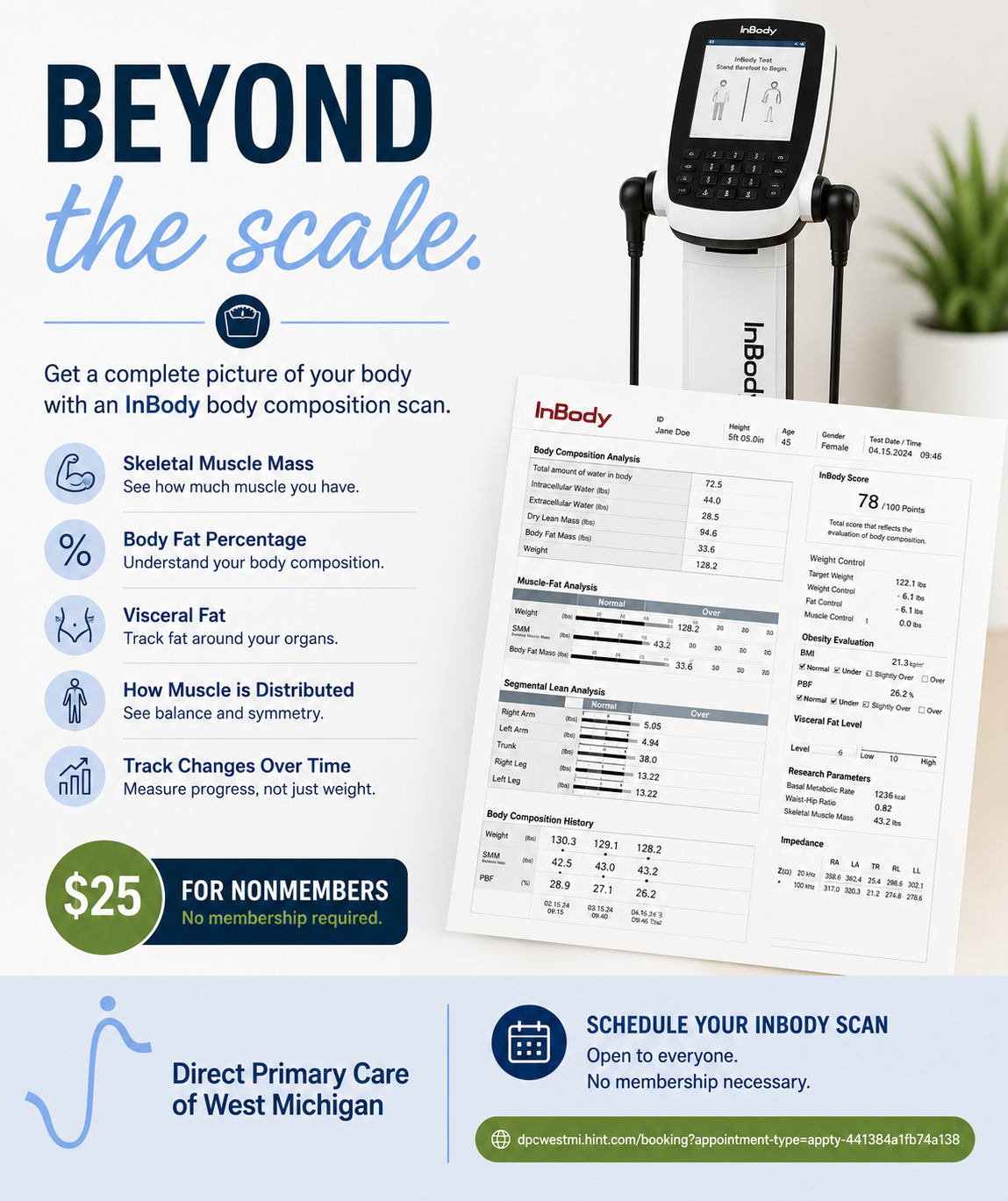
An InBody scan provides detailed information about:
- Body fat percentage
- Skeletal muscle mass
- Visceral fat
- Hydration status
- Segmental muscle distribution
- Basal metabolic rate
Whether you're trying to lose weight, improve your metabolic health, build muscle, or simply track your progress over time, understanding your body composition can provide insights that a scale never will.
Ready to Learn More?
Our InBody Body Composition Analysis provides a detailed assessment of your muscle mass, body fat percentage, visceral fat, hydration, and more.
Whether you're just getting started or tracking long-term progress, an InBody scan can help you better understand your health and focus on the metrics that truly matter.
You do not need to be a Direct Primary Care member to schedule an InBody scan.
Schedule your InBody scan today and discover what the scale can't tell you.